Bathroom Tile Guide: Styles, Materials & Tips
Choosing the right bathroom tile shapes the look and longevity of a space that encounters daily moisture and heavy use. A well-planned tile strategy blends aesthetics with performance, ensuring a bathroom that stays beautiful and easy to clean for years. As a seasoned designer and SEO strategist, I’ll share practical guidance on materials, layouts, installation, and maintenance to help you make informed decisions that honor your budget and style.
Choosing the Right Tile: Material Options
Ceramic Tile
Ceramic tile is affordable, lightweight, and available in numerous colors, sizes, and patterns. Glazed ceramic provides a moisture-resistant surface that cleans easily and accepts standard sealants or cleaners. It’s particularly popular for shower walls and backsplashes where a broad range of designs is desirable.
For high-traffic bathrooms, look for glazed ceramic with a dense body and a high PEI rating to minimize scratching and wear. Keep in mind that ceramic is generally softer than porcelain, so heavy impact areas or rough use can chip or wear over time.
Porcelain Tile
Porcelain is a denser, less porous variation of ceramic, with water absorption often below 0.5%. Its durability makes it ideal for floors, showers, and tile-in seating areas where moisture and foot traffic are significant concerns. Porcelain tiles come in both glazed and unglazed options, offering a broader range of slip resistance and textures.
While porcelain can be more expensive and harder to cut than standard ceramic, its longevity and low maintenance costs frequently justify the investment, especially in wet zones and contemporary designs.
Natural Stone
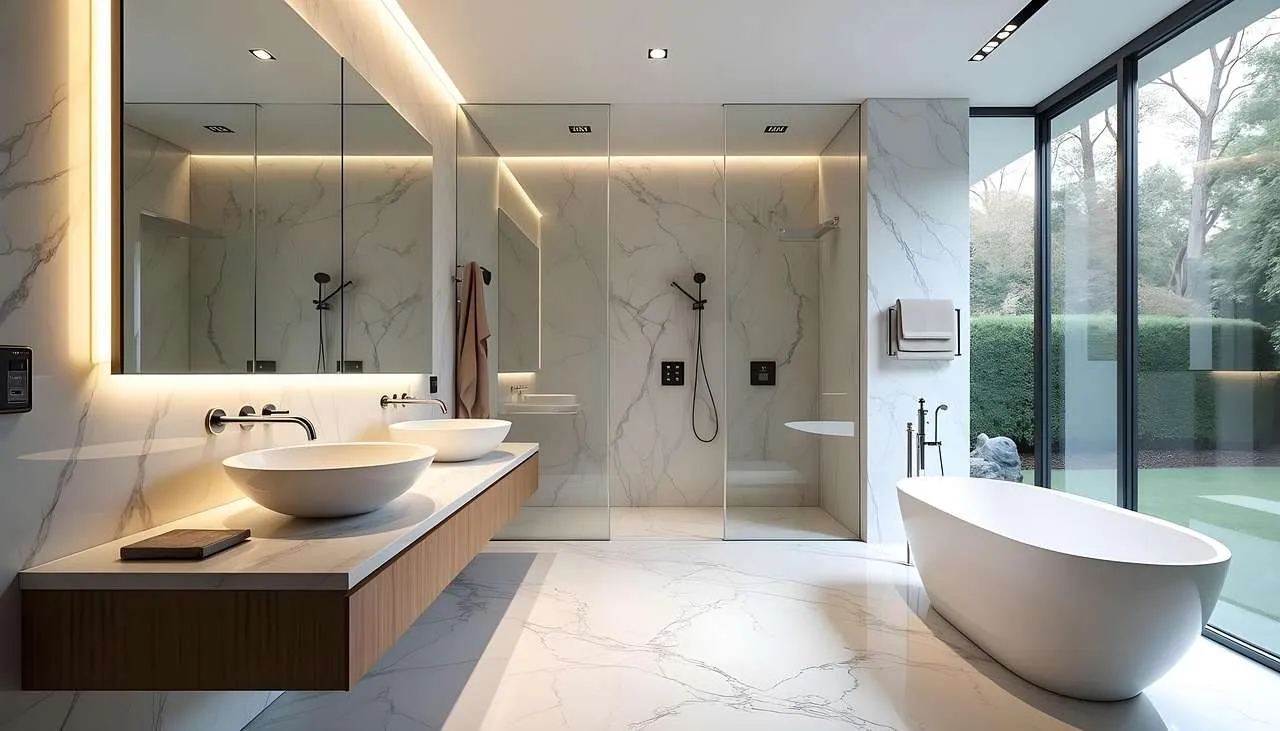
Natural stone such as marble, travertine, or slate delivers a premium, timeless look. Each stone has unique veining and color variations that add character to a bathroom. However, natural stone often requires sealing to protect against water, oils, and staining, and some varieties are more porous than others.
Stone maintenance includes periodic resealing and careful cleaning with pH-balanced products. If you want luxury with manageable upkeep, choose honed finishes or less porous stones and factor in a sealing schedule in your budget.
Glass and Mosaic Tiles
Glass tiles bring light, depth, and a contemporary glow to walls and backsplashes. They work well as accents or borders and can pair beautifully with neutral large-format tiles. Glass tiles are non-porous and easy to clean but can be slippery on floors and may require a skilled installer for precise grout lines and edges.
mosaics offer texture and grip in showers, but grout maintenance tends to be higher due to more grout surface area. Choose epoxy grout in wet zones to reduce staining and cracking over time.
Size, Pattern, and Layout
Tile size influences perception of space and maintenance. Large-format tiles create a seamless, modern look with fewer grout lines, while small mosaics add texture and grip, particularly on shower floors. Popular layouts include straight lay, offset (brick pattern), diagonal, and herringbone. For bathrooms, offsetting joints by half a tile helps avoid visible seam lines that can look busy over time.
Pattern choice should harmonize with the overall design: light-colored walls benefit from slightly darker grout to emphasize cool lines; monochrome palettes gain depth through varied tile shapes; and bold patterns can serve as a focal point without overwhelming the room.
Shower and Floor Considerations
Moisture control and slip resistance are essential in wet zones. Choose porcelain or ceramic floor tiles with a 0.5–0.6 water absorption rating or lower, and select slip-resistant textures (rating family R9–R12 or higher, depending on region). Use a high-quality waterproof membrane beneath tiles in showers and wet areas to protect studs and framing from water damage.
Grout color can dramatically affect the final look. Light grout brightens the space and highlights tile edges, while dark grout conceals dirt and creates a bolder, saturated effect. Epoxy grout offers better stain resistance in challenging bathrooms, though it can be harder to work with than cementitious grout.
Installation Basics and Budget
Preparation matters. Start with a clean, flat, and stable substrate, then install a moisture barrier and an appropriate waterproofing system before tiling. Plan for expansion gaps around fixtures and transitions between different floor levels. Match mortar type to tile and use proper trowel size for even bedding. If you’re tiling in a wet zone or across multiple zones (shower, vanity area, bath), professional installation reduces risk of failure and can save long-term costs through proper sealing and grout maintenance.
- Choose the right substrate and waterproofing for showers and steam-prone rooms.
- Use a quality thinset mortar appropriate for the tile material and location.
- Account for expansion joints around irregular fixtures and transitions.
- Consider professional layout planning to ensure straight lines and balanced patterns.
Maintenance and Longevity
Clean with pH-neutral cleaners to protect glaze and avoid acidic or abrasive products that can erode grout and tile surfaces. Seal natural stone and unglazed tiles as recommended by the manufacturer, and plan for regular grout maintenance. Regrouting or resealing damaged areas prevents water penetration and preserves the tile’s appearance and structural integrity.
Cost and Options: Quick Reference
| Tile Type | Typical Cost per m2 | Durability | Best For |
|---|---|---|---|
| Ceramic | $10-$25 | Low to mid | Walls, backsplashes |
| Porcelain | $15-$45 | High | Floors, showers |
| Natural Stone | $25-$100 | Variable | Luxury bathrooms |
| Glass | $20-$60 | Medium | Accents, shower walls |
Color, Grout, and Finishing Touches
Grout and edge details finish the tile job. Epoxy grout in wet zones resists staining and moisture better than cementitious options, though it may require professional installation. Mixing grout colors with tile tones can create cohesive walls or add a subtle contrast. Matching baseboards, trim, and shower niches helps tie the space together and can influence perceived tile size and space.
Sustainability and Certifications
For eco-conscious buyers, look for tiles manufactured with low VOC adhesives, recycled content, and certifications such as FloorScore or GREENGUARD. Durable, long-lasting tiles reduce replacement cycles and waste, contributing to a greener bathroom remodeling project.
DIY vs Professional Installation
DIY tiling can be rewarding for walls, backsplashes, and small panels, particularly with ceramic tiles. However, wet zones, large-format porcelain, and floor installations benefit from professional installation due to waterproofing requirements, precise leveling, and professional grouting. A skilled installer helps ensure alignment, waterproof integrity, and warranty coverage.
Conclusion
Summary: A thoughtful selection of bathroom tile balances style, performance, and longevity. Ceramic and porcelain deliver durability at accessible price points, while natural stone offers luxury with maintenance considerations. Plan for waterproofing, proper substrate prep, and professional installation to ensure a moisture-resistant, easy-to-clean bathroom tile outcome. Regular cleaning and timely maintenance extend tile life and preserve its beauty for years.